
Book Introduction
Introduction
A closer look at the book overview
Book Introduction
About This Book
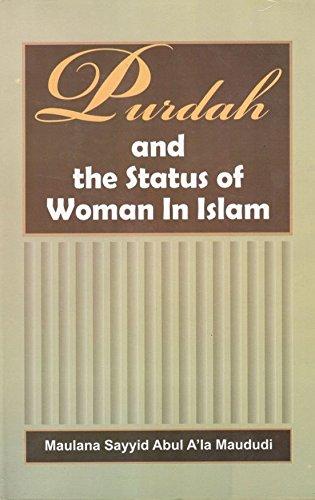
The text provided offers a profound sociological and historical analysis regarding the status of women and the stability of civilizations. According to the insightful observations of Syed Abul A'la Maududi رحمۃ اللہ علیہ, the most fundamental issue facing human community life—the very pivot upon which real advancement and well-being depend—is the proper adjustment of the relationship between husband and wife. It is argued that this relationship provides the bedrock for social life, and the future stability of any society relies heavily on how this equation is balanced. However, despite its critical importance, this problem has historically baffled philosophers and sages. The intricate nature of human relationships has defied simple solutions because a just resolution requires a comprehensive understanding of human nature in its entirety. As explained by Maulana Maududi رحمۃ اللہ علیہ, man is a "world in himself." To truly understand the social needs of humanity, one must comprehend the complex interplay of physical and mental make-up, capabilities, emotions, desires, and the countless active and passive relationships man holds with the world around him. This is an arduous task. Science and human intellect have yet to attain a stage of perfection where they can claim to encompass all knowledge of the human sphere. Because human knowledge is often fragmented—focusing on one facet while ignoring others—and because human judgment is frequently clouded by personal inclinations and biases, man has consistently failed to solve the basic problems of his own life. Without a balanced view of the whole, solutions tend to gravitate toward extremes. Syed Maududi رحمۃ اللہ علیہ illustrates that history is replete with examples of these exaggerated notions resulting from a conflict of extremes. On one side of the spectrum, humanity has witnessed eras where women were reduced to the status of maids or bondwomen. In such societies, the woman—who is the mother of man and his partner in life—was treated as chattel, deprived of inheritance and ownership rights, and regarded as an embodiment of misfortune. She was denied all opportunities to develop her personality. Conversely, the pendulum has often swung to the other extreme, where women were raised to a prominence that unleashed a storm of immorality. In these instances, she became a plaything for carnal indulgence and an agent of degeneration, leading to the moral collapse of society. These two extremes are not merely theoretical concepts but have played out in practical history with devastating consequences. The text notes that when a community first emerges from barbarism, women often follow men as subordinates. As the civilization advances and realizes it cannot progress while keeping half its population in bondage, it attempts to make amends. However, rather than finding a balanced middle ground, societies often bestow undue freedom upon the female sex. This excessive liberty deals a fatal blow to family life, which is the foundation of civilization. The free intermingling of sexes inevitably brings about obscenity and sexual perversion, which drains the community of its intellectual and physical energies, eventually leading to total destruction. To demonstrate this cyclical rise and fall, Maulana Maududi رحمۃ اللہ علیہ examines the history of Greek civilization. In the early stages of Greece, women were looked down upon both morally and socially. Greek mythology contributed to this mindset through the story of Pandora, an imaginary woman believed to be the source of all human ills, much like the distorted view of Eve in Jewish and Christian mythology. The Greeks viewed women as sub-human creatures, with honor and pride reserved solely for men. As Greek civilization progressed, the legal position of women remained inferior, but their social status improved slightly. The woman became the "queen of the home," with authority restricted to the domestic sphere. Chastity was highly valued, and women of nobility observed Purdah, segregated from male gatherings. However, as Syed Maududi رحمۃ اللہ علیہ points out, this balance did not last. While women were held to high standards of chastity, men were exempt from such requirements. Prostitution was embedded in society, and it was not considered improper for men to associate with corrupt women. Over time, the Greeks were overwhelmed by egotism and sexual perversion. The corrupt female element gained unprecedented prominence. The houses of prostitutes became centers of intellectual and political life, attracting philosophers, poets, and historians. Matters of national importance were decided under the influence of women who had no loyalty to any single partner. This moral depravity was reflected in their art and religion. The worship of Aphrodite, the goddess of love and beauty, spread throughout Greece, sanctifying adultery and licentiousness. The society became so degraded that even philosophers did not censure adultery, and the common man viewed marriage as an unnecessary restriction. Eventually, this moral decline led to the total collapse of the Greek nation, from which it never recovered. Following the Greeks, the Romans rose to glory, only to follow a similar trajectory of moral decay. Syed Abul A'la Maududi رحمۃ اللہ علیہ traces the Roman path from a society of stern discipline to one of absolute licentiousness. In the early stages of Roman history, the family unit was strictly patriarchal, with the man holding the power of life and death over his wife. As Rome advanced, the rigors of this system softened into a disciplined moderation. During the zenith of Roman democracy, although women did not observe Purdah in the strict sense, they were kept under unrelenting family discipline. Female chastity was the criterion of nobility, and the moral standard was so high that a Senator could be censured for kissing his wife in front of his daughter. However, as civilization brought material advancement, the Roman concept of womanhood underwent a complete metamorphosis. Maulana Maududi رحمۃ اللہ علیہ describes how marriage was reduced to a mere civil contract, terminable at the sweet will of the partners. Laws were changed to give women full proprietary rights, making them financially independent of their fathers and husbands. This economic shift, coupled with a lack of moral restraint, led to a situation where wealthy wives held their husbands in virtual slavery through financial leverage. Divorce became rampant, with women calculating their age by the number of husbands they had taken. The text cites Roman historians and philosophers like Seneca and Juvenal, who lamented that divorce was no longer shameful and that women changed husbands as a matter of routine. As the checks on public morality weakened, Rome was flooded with sexual lawlessness. Adultery came to be viewed as a minor offense, and moral preceptors began to plead for laxity. The text highlights how theatres became scenes of nude performances, and art began to celebrate immorality. Prostitution became so widespread that laws had to be enacted to prevent women of nobility from entering the trade. Public baths where men and women mingled became common, and literature was filled with immodest themes. Syed Maududi رحمۃ اللہ علیہ concludes this historical analysis by noting that when the Romans allowed themselves to be overwhelmed by animal passions and lost their moral compass, their glory faded away completely, leaving them destroyed. The narrative provided in the text serves as a potent warning. It illustrates that human attempts to solve the problem of the sexes without divine guidance or a balanced view of human nature invariably lead to one of two extremes: tyranny or anarchy. Both the Greek and Roman civilizations crumbled not due to a lack of military might or economic wealth, but due to the disintegration of the moral fabric that binds the family and society together. The text ends by briefly mentioning that Christianity eventually arrived to cure the West of these moral ailments, attempting to cleanse society of immodesty and eradicate the rampant prostitution that had destroyed previous civilizations. Through this detailed historical survey, Syed Abul A'la Maududi رحمۃ اللہ علیہ reinforces the central thesis that the stability of a civilization is inextricably linked to the status of women and the regulation of the relationship between the sexes.