
Book Introduction
Introduction
A closer look at the book overview
Book Introduction
About This Book
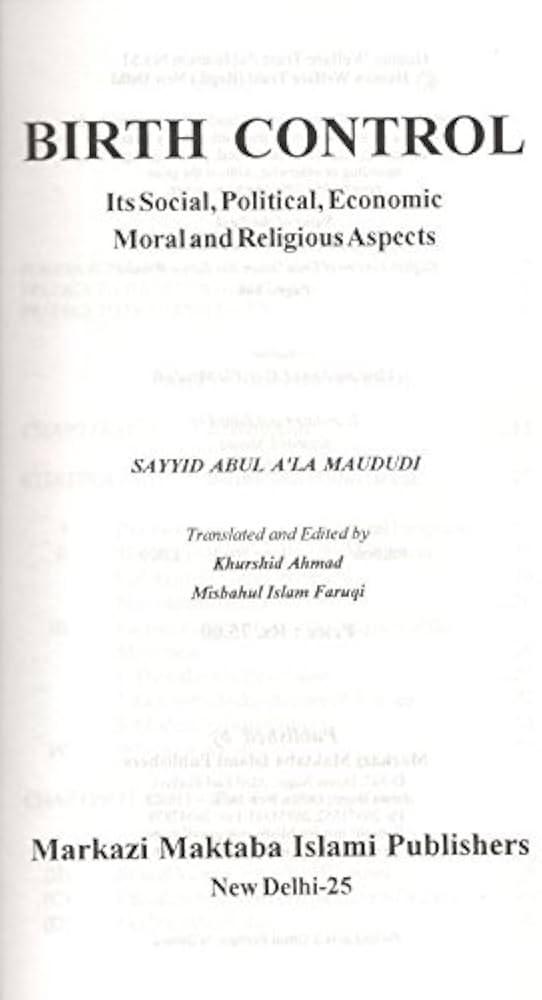
The text provided offers a profound critique of the modern movement known as birth control, positioning it not merely as a medical or social utility but as a slogan and a cliché to which the contemporary age has become addicted. The narrative begins by acknowledging that while some individuals may sincerely believe in the utility of birth control, a vast number of people have fallen victim to an aggressive propaganda war. This campaign is described as being forcefully thrust upon the people, specifically targeting the emerging nations of the East. The summary of the provided content reveals a deep concern that all vehicles of persuasion, and in some instances, pressure and persecution, are being utilized to compel conformity to what is described as the heresy of our times. A significant portion of the introductory analysis focuses on the suppression of dissenting voices. It is argued that the proponents of birth control do not meet arguments with counter-arguments; rather, they resort to ridicule, allegations, and the stifling of opposing viewpoints. A primary example of this intellectual suppression is the history of the book itself, authored by Syed Abul A'la Maududi رحمۃ اللہ علیہ. Originally written in the mid-1930s and serialized in the monthly journal Tarjumanul Qur’an, the work was later published in book form in 1943. Despite its popularity, evidenced by multiple editions, the book faced severe opposition from the protagonists of the birth control movement who were reportedly uneasy with the arguments presented. Instead of engaging in a scholarly debate, these forces attempted to silence the voice of sanity through legal prohibitions. In 1966, the government banned a pamphlet containing a chapter of the book, and shortly thereafter, the book itself was proscribed by the Government of West Pakistan. It was only after the publishers challenged this decision in the High Court that the ban was declared void, allowing the book to return to the stalls. This sequence of events is highlighted to illustrate a "new kind of inquisition" staged in the name of modernity and progress, where rational debate is shunned in favor of censorship. The editors of the work emphasize that their objective is to provoke a debate on a rational and academic plane. They assert that the viewpoints presented by Maulana Maududi رحمۃ اللہ علیہ are scholarly and should be met with criticism of equal scholarly weight rather than administrative suppression. The text also notes the difficult circumstances under which the translation and revision of the work took place. At the time of the English translation's completion, the author was imprisoned, a fate shared by many political leaders of emerging nations who insisted on independence of thought. Syed Maududi رحمۃ اللہ علیہ was incarcerated for the fourth time, on this occasion for refusing to endorse a patent error regarding the sighting of the moon, displaying his characteristic forthrightness. Consequently, the editors were unable to consult him directly regarding the translation, yet they took full responsibility for presenting his analysis, which relies heavily on Western data—not to agree with Western inferences, but to use their own evidence to construct a counter-argument. The core of the author’s argument, as detailed in the Preface written in 1943, connects the decline of great world powers to the adoption of birth control and the associated moral laxity. Syed Abul A'la Maududi رحمۃ اللہ علیہ reflects on the years since he first wrote on the subject in 1935, observing that the dangers he visualized had increased manifold. Writing against the backdrop of World War II, he points to the tragic fall of France as a colossal consequence of the ethico-social policies born of the unrestricted liberalism of the eighteenth and nineteenth centuries. The text cites Marshall Petaine, who confessed that the defeat of France in June 1940 was a direct result of the nation's self-indulgence, lust, and sensuality. Specifically, Petaine attributed the collapse to "too few children," suggesting that a constantly dwindling birth rate had sapped the vitality of a country that had long been a dominant world power. This historical example is used to serve as a stark warning to other nations that might be tempted to follow the same path of cultural and demographic suicide. The analysis extends to Great Britain, which was also facing the threat of a declining population. Maulana Maududi رحمۃ اللہ علیہ references Randolf Churchill, the son of Winston Churchill, who expressed grave concern that the British population might shrink to a mere four million within a century. Such a reduction would strip the nation of its status in the comity of nations. The driving force behind this decline is identified as a social obsession with status and standard of living. Englishmen, it is argued, became so focused on maintaining a high standard of life and education—comparable to their neighbors—that they viewed having more than one or two children as an impediment to their social aspirations. This materialist mindset, where social status supersedes the survival of the race, is criticized as a fatal weakness. The text laments that despite these glaring lessons from history and reason, many people remain blinded by pseudo-scientific terminology and refuse to acknowledge the destructive nature of birth control policies. Moving from the European context to the Indo-Pak subcontinent, the text traces the origins of the birth control movement in the region. It identifies Mrs. Edith Howe Martyn, the Directress of the London Birth Control International Information, as the initiator of the movement in India. Through her extensive tours and publicity campaigns, and with the support of colonial officials like Dr. Hutton, the Census Commissioner for the 1931 census, the idea that the population was increasing at an alarming pace was propagated. Syed Maududi رحمۃ اللہ علیہ notes that this foreign movement quickly gained a foothold, with local organizations, municipal corporations, and even the All-India Women Association adopting resolutions to support it. Clinics were opened in cities like Mysore and Madras, and the machinery of propaganda was set in motion to normalize these practices. Following the independence of India and Pakistan, the text observes that the governments of both nations wasted no time in adopting birth control as part of their national policies. In India, the National Planning Committee, and later the Planning Commission, declared family limitation essential for social economy and national planning. Similarly, in Pakistan, although there was initial hesitation, the government eventually adopted birth control as a key objective of economic policy, allocating millions of rupees in consecutive Five Year Plans to foster the movement. Syed Abul A'la Maududi رحمۃ اللہ علیہ critiques this blind adoption of Western methodologies, pointing out the irony in the political landscape. While India claims to be a secular state requiring no religious sanction for its policies, and Pakistan was founded on Islamic principles, both states aggressively pursued policies that Maulana Maududi رحمۃ اللہ علیہ argues are fundamentally at odds with the ethico-social fabric of their societies. The overarching theme of the provided text is a warning against the uncritical acceptance of Western ideas, which are described as products of a materialistic and sensate culture. Whether originating from the capitalist West or the communist bloc, these ideas are viewed as two sides of the same coin. The text serves as a call to open the eyes of those who treat Western trends as "Gospel truth." By analyzing the demographic collapse of France and the anxieties of Britain, Syed Maududi رحمۃ اللہ علیہ seeks to demonstrate that the path of birth control leads to national weakness and eventual oblivion. The work is presented not merely as a discussion on population statistics, but as a broader treatise on the social order, aiming to carve out a course of life distinct from the "beaten track" of the West. It invites the reader to consider the philosophical and moral implications of limiting human life for the sake of material comfort, urging a return to a social order envisaged by Islam that safeguards the vitality and future of the nation. The narrative is a powerful defense of independence of thought, challenging the imposed consensus of the modern age and demanding that the arguments against birth control be heard and weighed with the seriousness they deserve.