
Book Introduction
Introduction
A closer look at the book overview
Book Introduction
About This Book
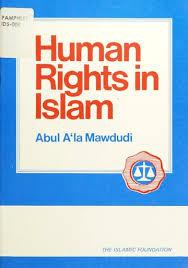
The following is a comprehensive summary of the provided text regarding human rights and the political system of Islam. The paradox of human existence is that while man is born free, he finds himself everywhere in chains. This observation is as relevant in the twentieth century as it was in previous eras. Despite secular attempts to resolve this crisis, total freedom remains elusive. While material conditions may have improved compared to three centuries ago, the political and social landscape has, in many respects, deteriorated. The rise of totalitarianism, despotism, and the restrictive structures of modern technological society have created new threats to human dignity. Consequently, there is an urgent need to re-evaluate the foundations of human rights. To address this, Syed Abul A'la Maududi رحمۃ اللہ علیہ, one of the most significant thinkers of the Islamic world, examined these issues through the lens of Divine guidance found in the Qur’an and the Sunnah. Born in 1903, the author began his public life at a young age, eventually becoming a journalist, scholar, and religious leader who authored over a hundred works. Maulana Maududi رحمۃ اللہ علیہ made a profound impact on the intellectual life of the Indo-Pakistan subcontinent, particularly with his seminal work on Jihad in Islam, published when he was only in his twenties. Through his monthly magazine and translated writings, his influence spread far beyond the subcontinent, making him one of the most widely read Muslim authors of the modern era. However, for Syed Maududi رحمۃ اللہ علیہ, Islam was never merely an intellectual exercise. He viewed Islam not as a collection of metaphysical doctrines or rituals, but as a complete way of life rooted in Divine Revelation. This way of life is designed to actualize righteousness and is permeated with God-consciousness. To translate these ideals into reality, he founded the Jamaat-i-Islami movement in 1941, leading it for decades and remaining a source of inspiration for Muslims worldwide even after stepping down from formal leadership. The life of Syed Abul A'la Maududi رحمۃ اللہ علیہ was characterized by a struggle to implement this Islamic vision, a path that often subjected him to persecution. Like many great Islamic scholars before him, he faced imprisonment and even threats of execution with immense dignity and fearlessness. Despite the pressures of leading a movement, he remained a prolific writer, most notably producing a monumental tafsir (exegesis) of the Holy Qur’an. A defining characteristic of his work was his ability to demonstrate the relevance of Islam to modern problems without succumbing to ultra-conservative rigidity or being overawed by Western trends. He advocated for a creative appropriation of beneficial human experiences while remaining subservient to the higher ends of the Islamic tradition. In discussing the political framework that underpins human rights, Maulana Maududi رحمۃ اللہ علیہ clarifies the concept of Khilafa (Caliphate). In Islam, the authority of the Caliphate is not vested in a single individual, dynasty, or class. Instead, it is bestowed upon the entire community that subscribes to the principles of Tawhid (Oneness of God) and Risala (Prophethood). This collective responsibility means that every individual in an Islamic society shares in the Caliphate of God. This concept forms the bedrock of Islamic democracy. According to Syed Maududi رحمۃ اللہ علیہ, this system ensures that every person enjoys the rights and powers of the Caliphate, and no one can deprive another of these rights. The state is formed through the agreement of these individuals, and the government’s authority is merely an extension of the powers delegated to it by the people. Consequently, the government must run with the advice and consent of the people, and a leader who loses their confidence must step down. However, Syed Abul A'la Maududi رحمۃ اللہ علیہ draws a sharp distinction between Islamic democracy and Western democracy. The fundamental difference lies in the concept of sovereignty. Western democracy is based on popular sovereignty, where the people are supreme and make their own laws. In contrast, Islamic democracy rests on the principle of popular Khilafa. Here, sovereignty belongs exclusively to God, and the people act as His representatives. While Western systems fulfill the will of the people, the Islamic system is designed to fulfill the will of God, adhering to the Divine Law (Shari'a). The state built upon these foundations has a specific purpose. It is not merely an instrument of administration or a tool to fulfill the collective will of a specific group. Rather, Maulana Maududi رحمۃ اللہ علیہ explains that the Islamic state exists to establish and develop virtues such as purity, beauty, goodness, and prosperity, while eradicating evils like exploitation, injustice, and disorder. Islam provides a clear moral outline, and the state’s welfare programs must align with these values. A crucial aspect of this system is the demand that moral principles be observed in all walks of life. The state cannot resort to fraud, falsehood, or injustice for the sake of political or national expediency. Whether dealing with its own citizens or other nations, the Islamic state must prioritize truth, honesty, and justice above all else. This moral framework extends to the rights and obligations of both the state and the individual. Power is viewed as a trust from God, for which one acts as a trustee accountable in the Hereafter. Syed Maududi رحمۃ اللہ علیہ emphasizes that human rights in Islam are not restricted by geographical boundaries. Islam lays down universal fundamental rights that must be respected under all circumstances. For instance, human blood is sacred, and the oppression of women, children, the elderly, and the sick is strictly forbidden. The hungry must be fed and the wounded treated, regardless of whether they belong to the Muslim community or are enemies. These rights are inherent to a person’s status as a human being. Furthermore, citizenship in an Islamic state is not limited by birth. Any Muslim who enters the territory of an Islamic state with the intent to live there becomes a citizen with full rights, eligible for positions of responsibility without discrimination based on race, color, or class. Syed Abul A'la Maududi رحمۃ اللہ علیہ also details the rights of non-Muslims living within an Islamic state. These citizens are termed dhimmis (the covenanted), implying a guarantee of protection by the state. Their life, property, and honor are to be respected exactly as those of Muslim citizens. There is no distinction in civil or criminal law between a Muslim and a non-Muslim. The Islamic state is prohibited from interfering with the personal rights and religious freedoms of non-Muslims. They are free to practice their rites, propagate their religion, and even criticize Islam within the bounds of law and decency. Maulana Maududi رحمۃ اللہ علیہ asserts that these rights are irrevocable. Even if a non-Muslim state oppresses its Muslim citizens, an Islamic state cannot retaliate against its own non-Muslim subjects. The blood of a single non-Muslim citizen cannot be shed unjustly, even if Muslims are being massacred elsewhere. Finally, the administration of this state is entrusted to an Amir (leader), who is comparable to a president or prime minister in a democratic framework. Syed Maududi رحمۃ اللہ علیہ notes that this leader is elected by all adult men and women who subscribe to the constitution. The qualifications for this leadership are strictly defined: the Amir must command the confidence of the majority regarding his knowledge of Islam, possess the quality of Taqwa (fear of God), and be endowed with statesmanship. To assist the leader, a Shura (advisory council) is also elected by the people, ensuring that governance remains a consultative and collective endeavor rooted in the divine principles of justice and equity.